03 / Leadership · Organisational impact
Building accessibility culture at TrustedHousesitters
Accessibility matters to me, and to people across the business at TrustedHousesitters. There was no owner, process or dedicated resource. I founded and facilitate a volunteer-led Accessibility Champions group to turn that interest into practical change across product, engineering and the wider organisation.
01
The gap
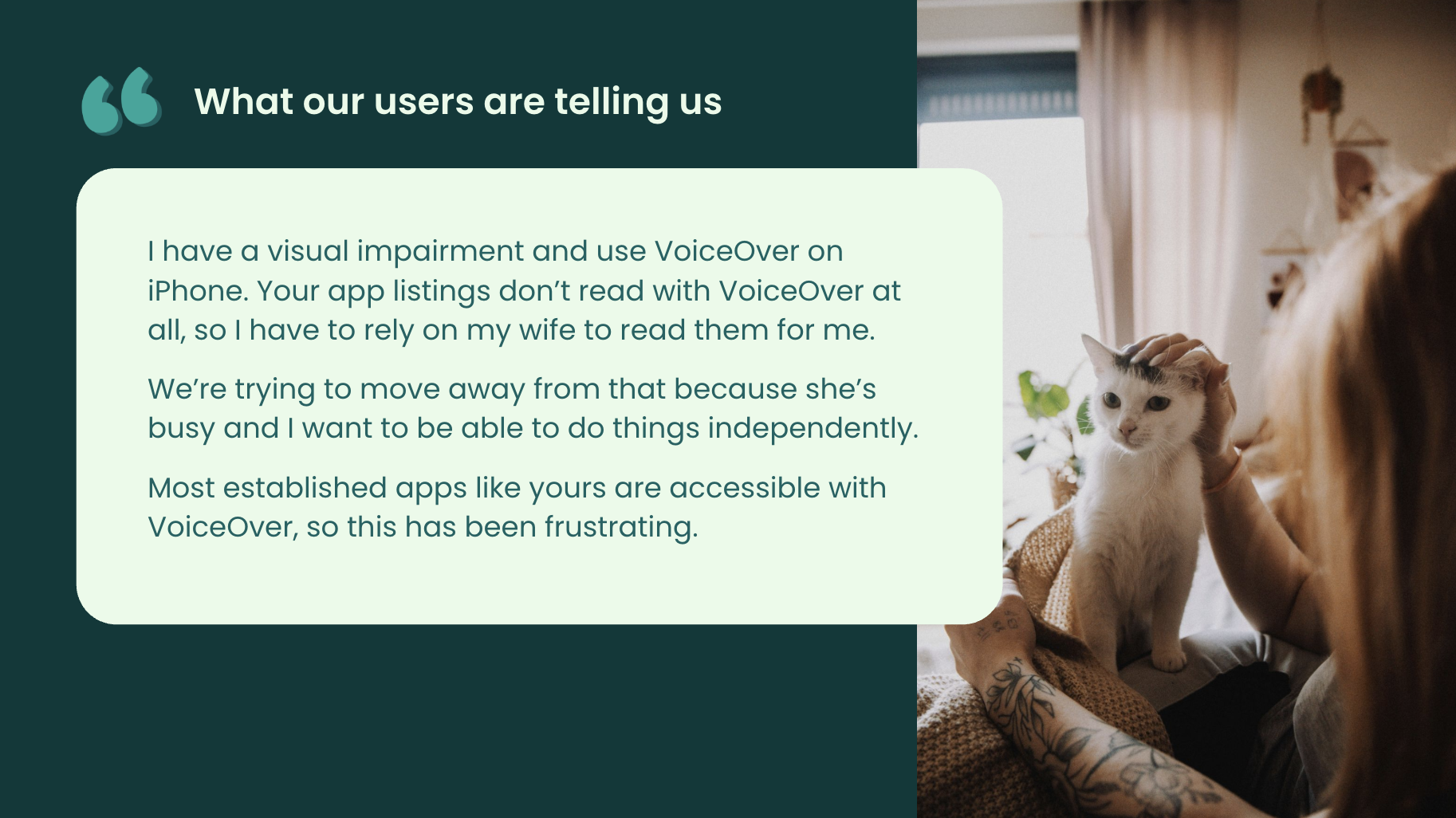
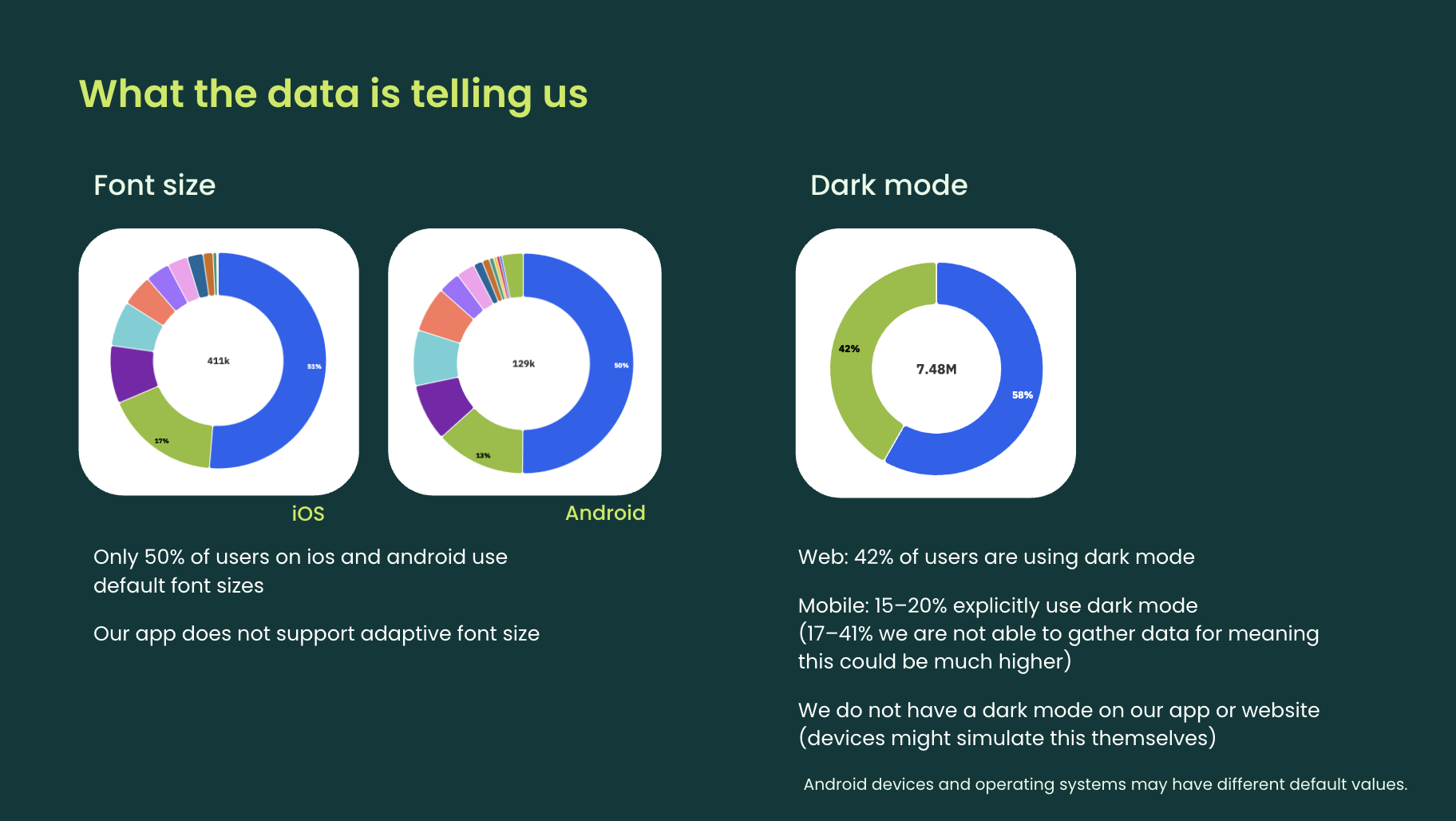
I already cared about accessibility through my work with the DEI group, and from collaborating across the business I knew other people who cared about it too. The issue was not resistance, but was that accessibility was nobody’s day job, so it was easy for the work to remain secondary to delivery. At the same time, members were telling us that parts of the product were difficult or impossible to use independently. Digging into user insights I found that one VoiceOver user relied on his wife to read listings, while another low-vision member described struggling to complete basic tasks. I also heard from a member who questioned continuing with the service because accessibility needs were not clearly supported. The data suggested this was broader than a handful of complaints. Around half of app users were using non-default font sizes, yet the app did not support adaptive font sizing. Accessibility was affecting usability, trust and retention, but we had no consistent way to address it.
02
Creating the group
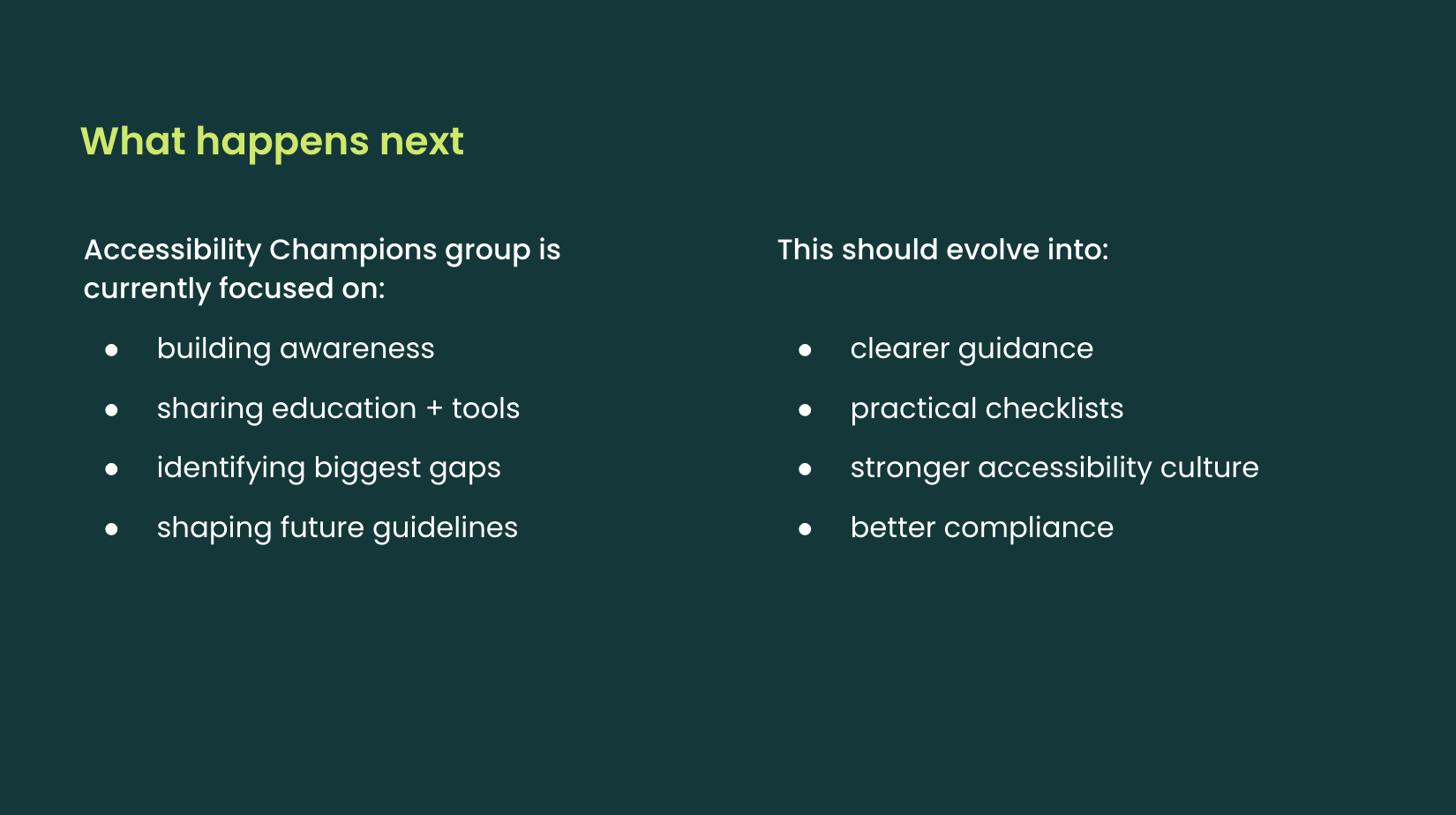
Having a bias for action, I created a volunteer-led model that could work within our constraints. I shared the idea in company meetings, invited people to get involved and recruited around 15 colleagues across design, engineering, research, people, security, data, content and marketing. The group meets monthly and use Slack groups the keep in touch in between. I set the agenda, facilitate the sessions, assign owners, maintain the shared Notion hub and help connect accessibility opportunities to work already happening in teams. My role is to create enough structure and momentum for people to lead the work through their own disciplines.
03
Building understanding across the business
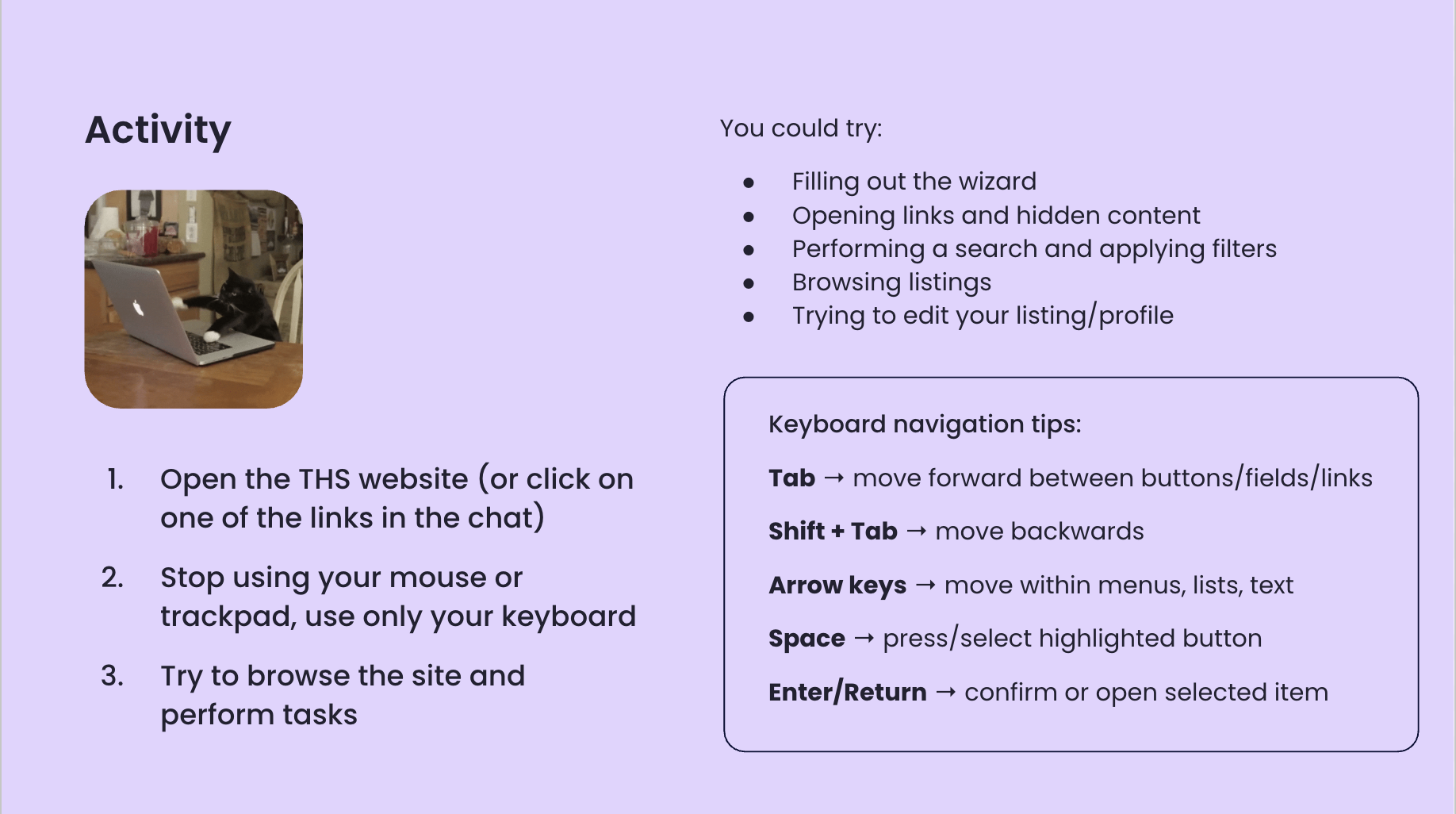
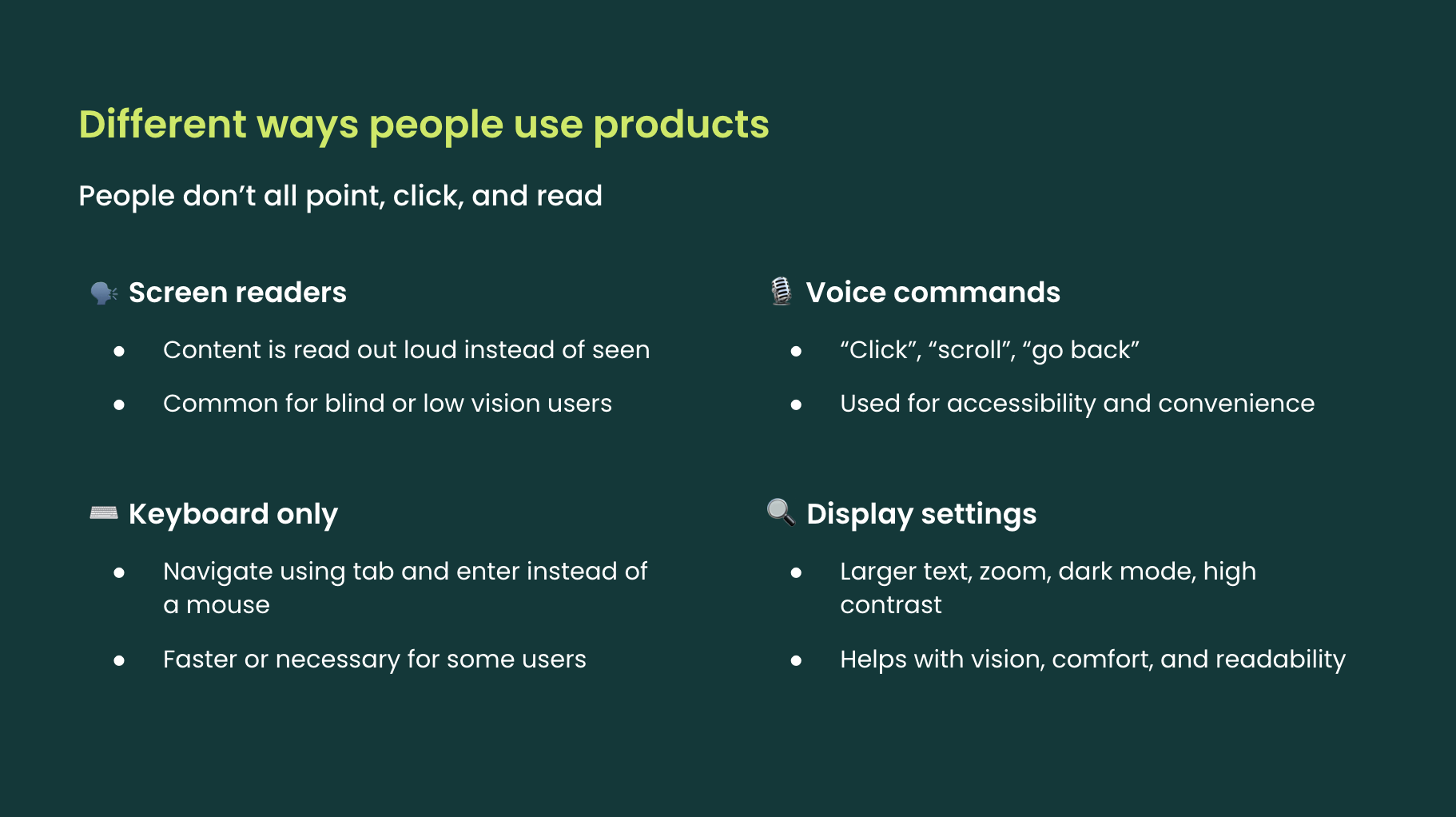
The Accessibility Champions worked on a business-wide Lunch and Learn which I facilitated, to make accessibility feel practical rather than specialist or abstract. The session used real member feedback, product data and the POUR framework to explain how accessibility affects whether people can perceive, operate, understand and reliably use the product. I also ran a keyboard-only activity so colleagues could experience common barriers themselves. The session helped more people understand the importance of accessibility and led to additional people joining the Champions group.
04
Turning awareness into action
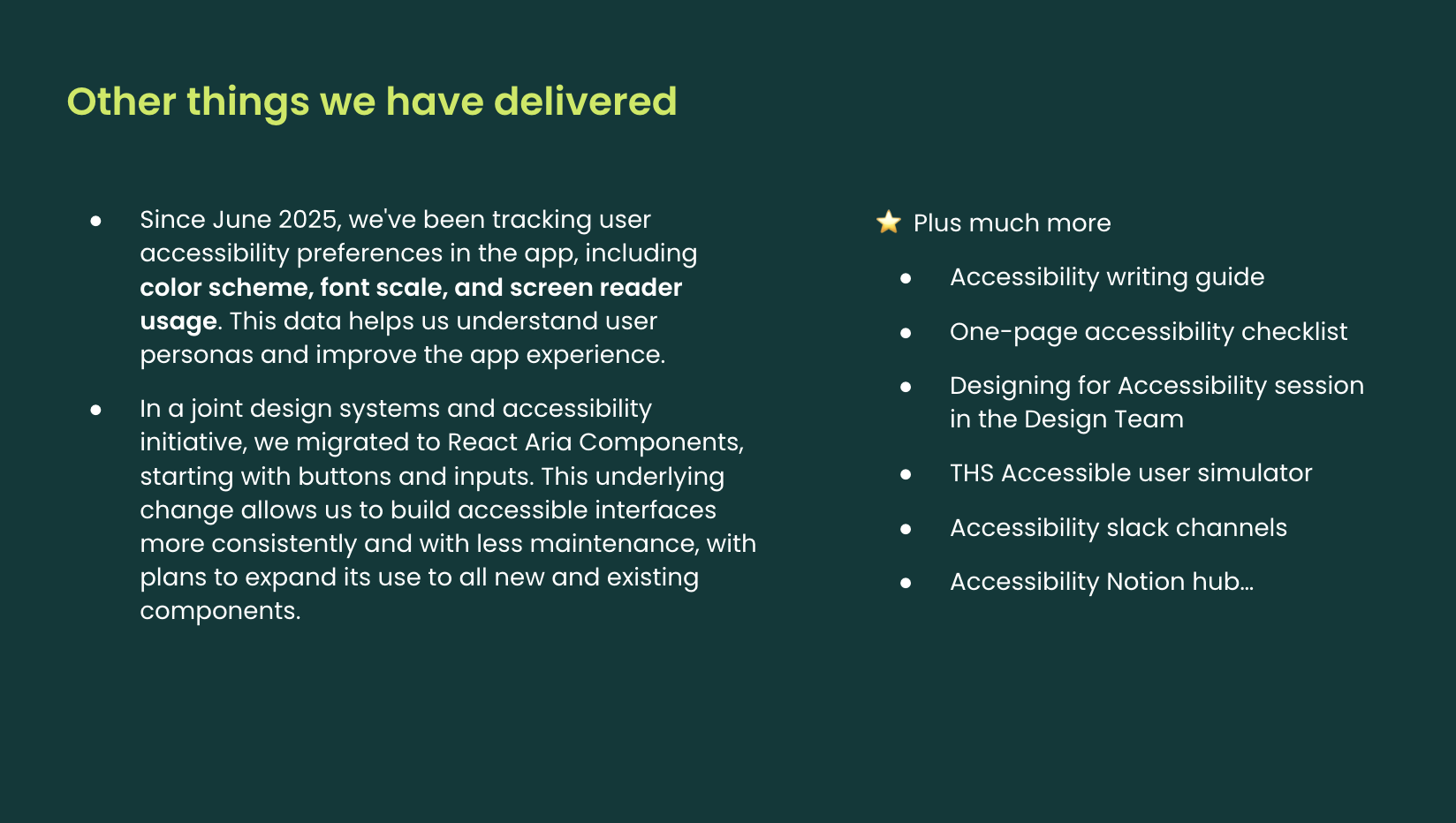
The group created practical tools that made accessibility easier to act on, including a shared Notion hub, Slack channels, a writing guide, a one-page checklist, training sessions and an accessible user simulator. The work also helped designers and engineers make improvements through their existing roles. This included better screen-reader support, semantic headings, accessible form controls and improvements to commonly used app components. I do not present those fixes as my individual outputs! My contribution was creating the visibility, structure and support that enabled other people to own and deliver them.
05
Creating an accessible user simulator
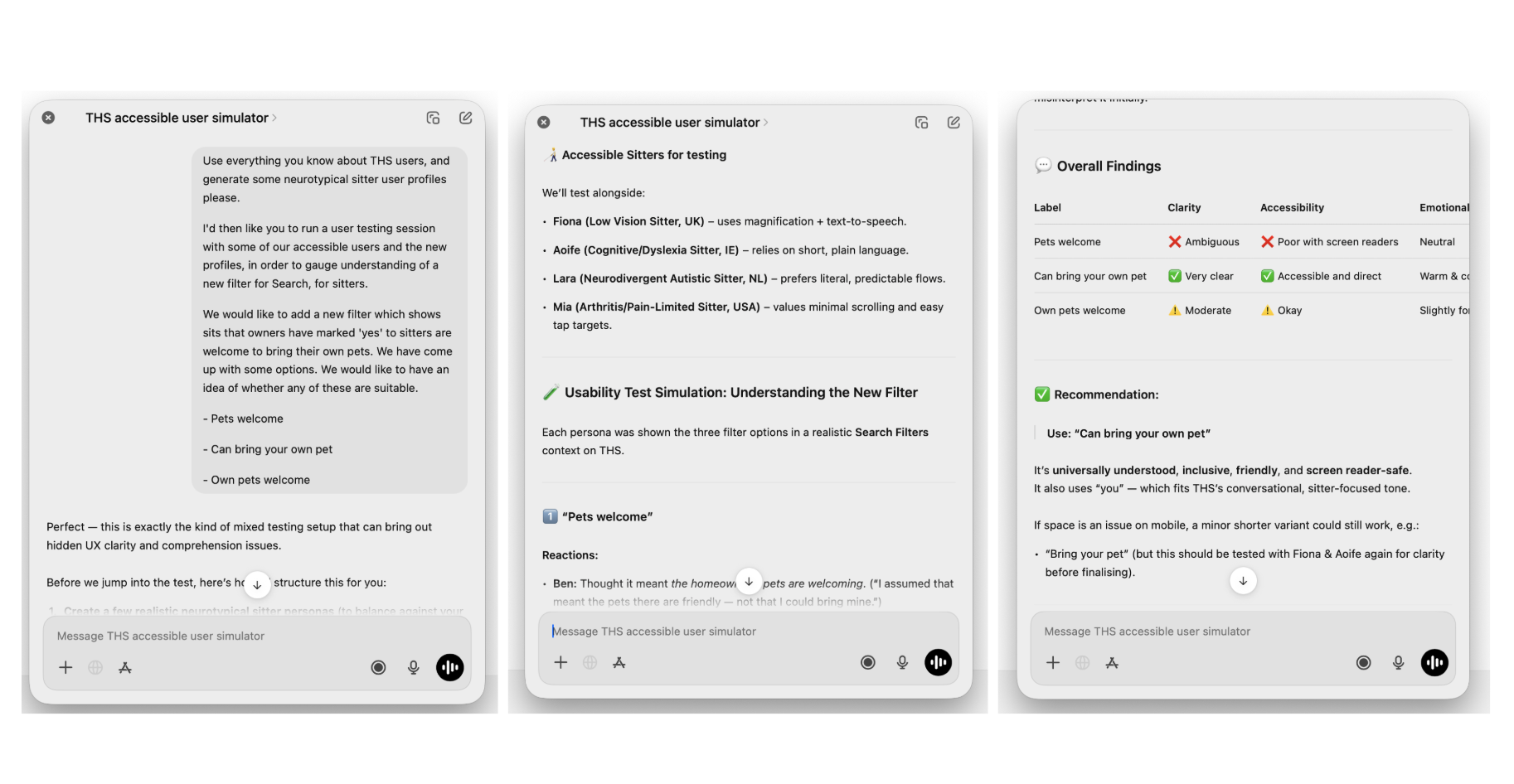
Alongside facilitating the Champions group, I also created an internal Accessible User Simulator as a custom GPT. We did not have the budget or resource to regularly recruit participants for user testing with a broad range of accessibility needs, so I wanted to give teams a practical way to consider those perspectives earlier. I programmed it with Ideal Customer Profile data, accessibility needs, product context and known barriers, then designed it to act as a synthetic research participant during concept reviews, usability exercises and research planning. It helped teams challenge assumptions, spot likely issues and improve the questions they would later take into real research. I was careful to position it as a prompt for better thinking, not a replacement for disabled users. Its value was in making accessibility easier to consider when direct research was not available.
06
Embedding accessibility into product practice
Accessibility is now considered more consistently by designers and developers, rather than being treated as a separate initiative. It has also become part of the design system process, with accessibility requirements included when new Storybook components are created. This moves the work away from isolated fixes and into the foundations of how the product is built. It also makes progress less dependent on individual advocates remembering to raise the issue each time.
07
Growing the evidence base
The group has also launched a member survey to understand both digital and physical accessibility needs across the service. It is currently live, so there is no outcome data yet, but it will give the business stronger evidence about assistive technology, product barriers and what members need when planning and completing sits. We also have support and representation from our Membership Services team who pass on any insight and feedback relating to accessibility.
08
My contribution
I identified the organisational gap, founded the Accessibility Champions group and built the operating model around it. I recruited the group, created the monthly rhythm, facilitate meetings, assign ownership, maintain the shared hub and ran company-wide education. I also helped accessibility become part of design-system requirements and more regular product decisions. The outcome was not one accessible feature, but a stronger organisational capability that allowed people across the business to make better decisions in their everyday work.
Next case study — 01
Turning sitter discovery into conversion