02 / AI implementation · Discovery
Exploring the future of discovery with Natural Language Search
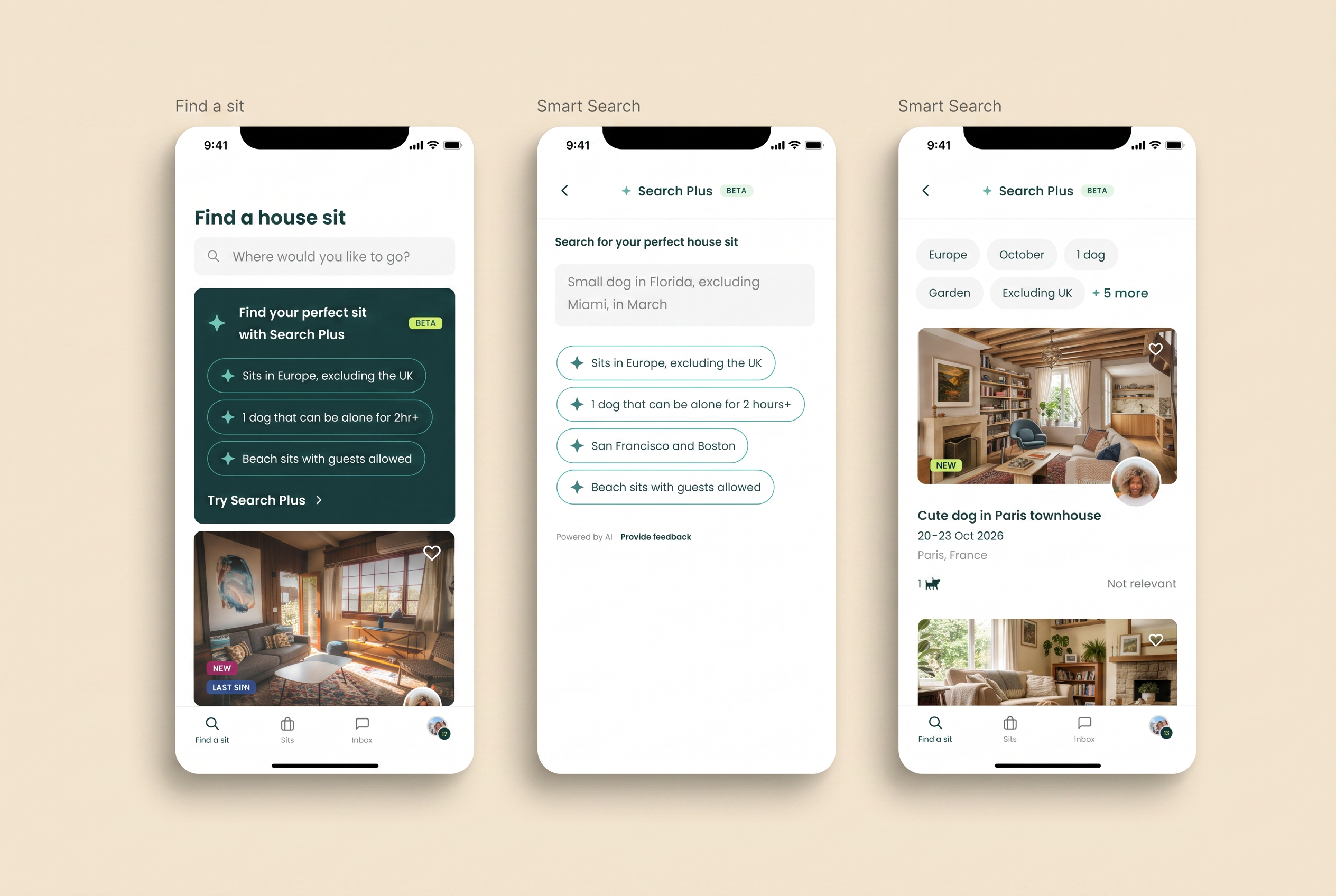
Search Plus reimagined how sitters discover opportunities by letting them search in the same way they think. I took the experience from concept to live beta, creating a more expressive way to explore the marketplace while uncovering new opportunities to improve relevance, trust and the wider search system.
Sole designer
Owned the experience from concept through to beta release
12
Moderated test sessions with current sitters
Mobile beta
Launched on iOS and Android
81.3%
Listing view rate, compared with 39.2% for normal search
42.5%
Application rate, compared with 18.5% for normal search
01
The opportunity
Sitters often know what they want, but not in a way that fits neatly into filters. A search like “a quiet flat with a cat, somewhere walkable, for around a week in September” contains several connected needs that users previously had to break apart and rebuild manually. I explored whether natural language could make that process feel more intuitive, while keeping the clarity and control people relied on from structured search.
02
Designing for trust
Natural language and AI technology in general creates high expectations for users. Once someone types a sentence, they expect the product to understand not only the words, but the meaning behind them. I designed Search Plus as a hybrid experience rather than a black box. For our Beta release, sitters could search in their own words, then see and edit how the system had translated their request into locations, dates, pets and other criteria. Across 12 moderated research sessions, sitters responded positively to the freedom of describing what they wanted naturally. Their confidence dropped quickly, however, when they could not see what the system had understood. This made transparency and editability central to the final interaction.
03
Launching a live beta
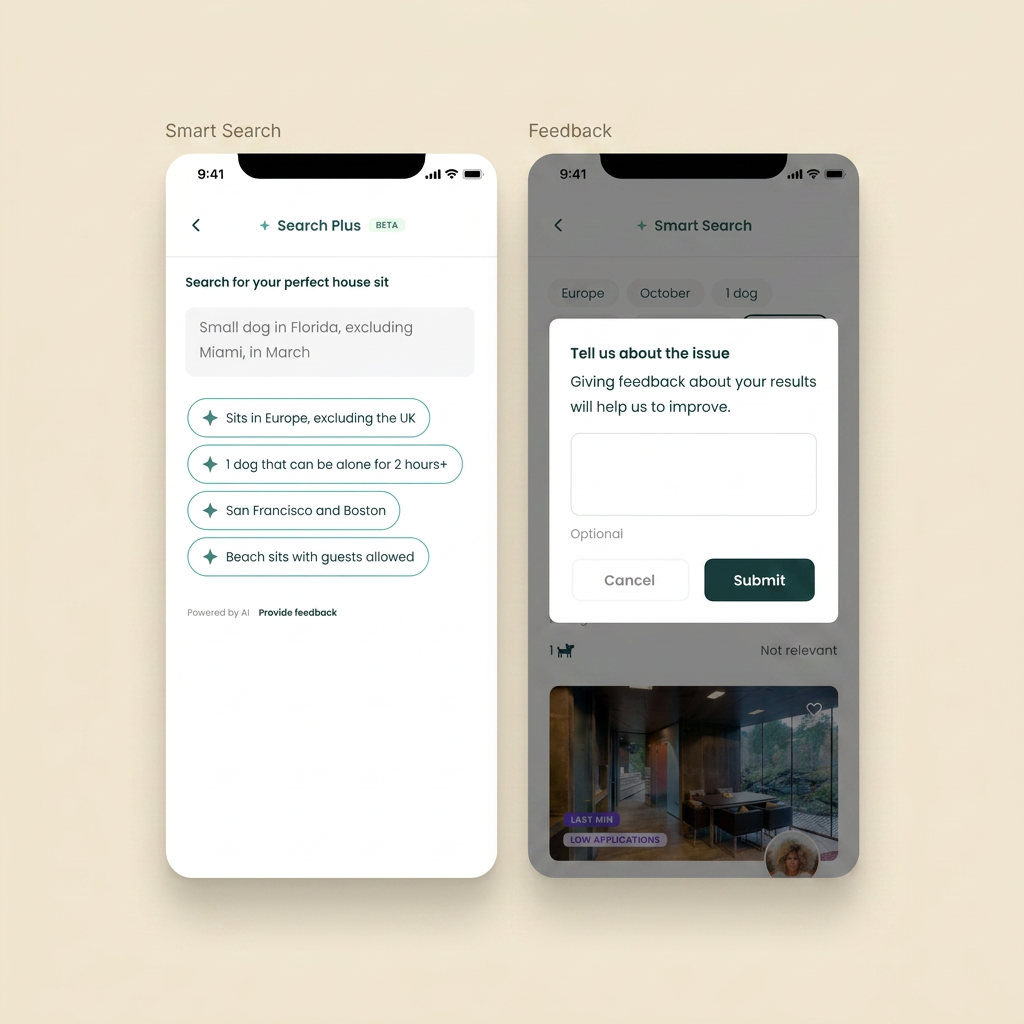
I took Search Plus from an early concept through to a live mobile beta on iOS and Android. The experience included feedback tools and trace-level analysis, allowing us to understand not only whether people used it, but where their intent was being lost between the query, the model and the search results. Users who tried Search Plus viewed a listing in 81.3% of sessions, compared with 39.2% for normal searchers. They also applied at a higher rate - 42.5% compared with just 18.5%. The Search Plus cohort was likely to be more engaged before using the feature, so I treated these results as a strong behavioural signal rather than claiming a clean causal uplift. Even with that caveat, the data showed that people who used the experience were finding value and progressing deeper into the marketplace.
04
Finding the real constraint
The beta revealed that the language model was rarely the main point of failure. Only 0.6% of queries produced an empty model output, while 10.3% returned no results from the backend. This changed the direction of the product conversation. Improving the experience was not simply a matter of refining prompts. The bigger opportunities sat across the wider search system: expanding the schema, applying interpreted criteria more consistently and closing gaps between Search Plus and standard search. Pet count was a clear example. People were asking for things like “one dog” or “no more than two pets”, but the product could not initially represent that intent. After adding structured support, explicit pet-count requests went from 0% to 100% capture in tested cases.
05
Outcome and next direction
The project moved natural language search from an ambitious idea into a live product with clear evidence of where it helped users and where the wider system needed to improve. It also gave us a new view of sitter intent. People searched for broader regions, excluded locations, specific settings, breeds, property features and pet-count limits that were difficult to capture through the existing interface. These queries revealed not only how sitters wanted to search, but where the product could better support the way they already thought about finding a sit. My contribution went beyond designing the interaction. I shaped a product model that balanced AI flexibility with user control, built the research and feedback loops around it, and used live evidence to direct investment towards the whole search experience rather than treating the model as the product.
Next case study — 03
Building accessibility culture at TrustedHousesitters